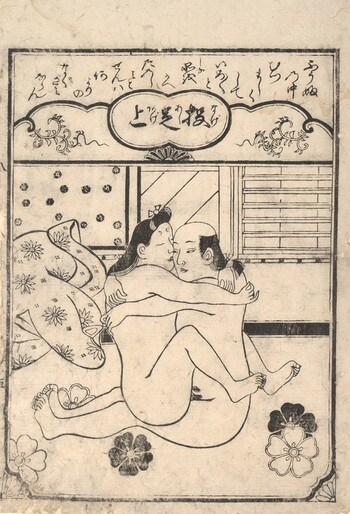
Early Ukiyo-e: Woodblock Prints Pre-1765
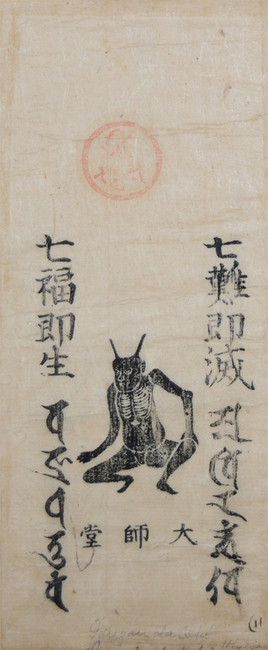
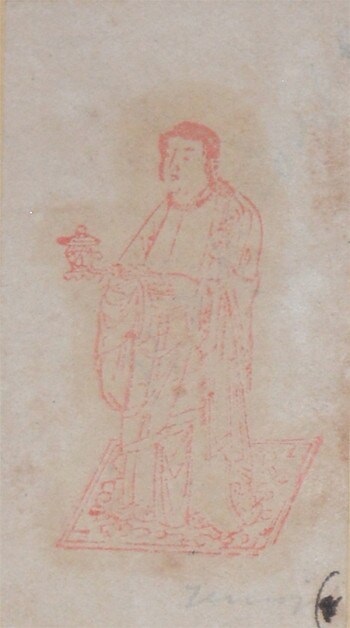
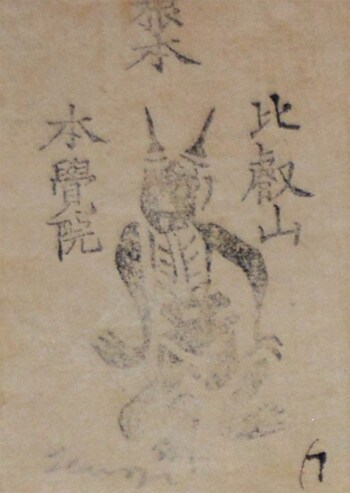
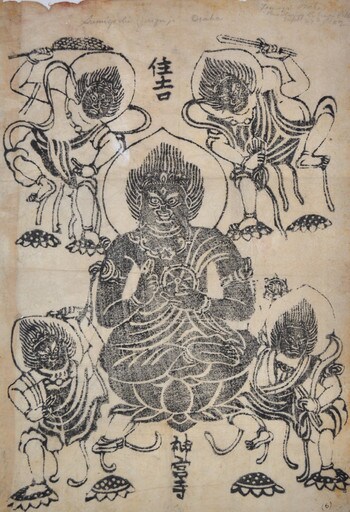
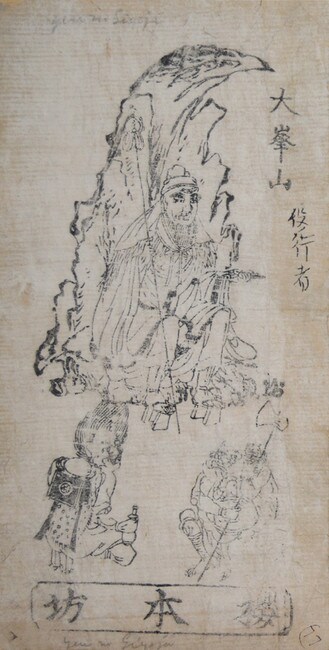
The origins of Japanese woodblock printmaking are deeply entwined with the introduction of Buddhism in the 6th century, when the earliest printed images served devotional purposes. These small-scale Buddhist prints were more than visual objects—they were acts of faith, each impression the result of careful carving, inking, and printing imbued with spiritual intent.
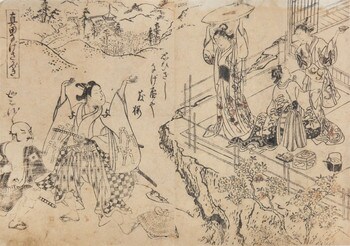
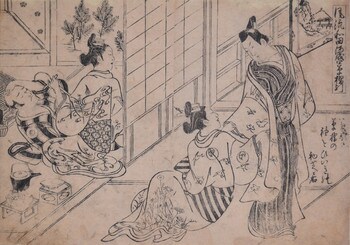
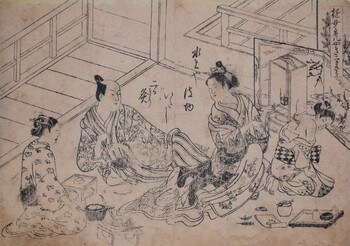
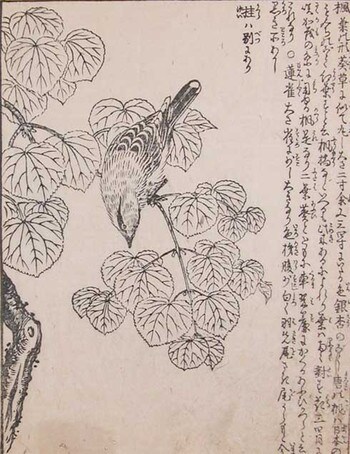
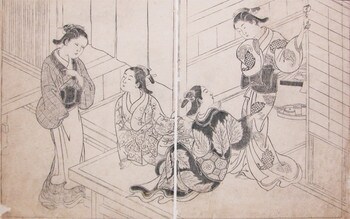
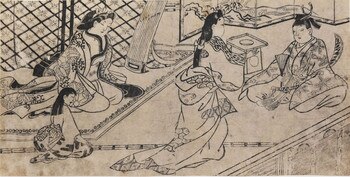
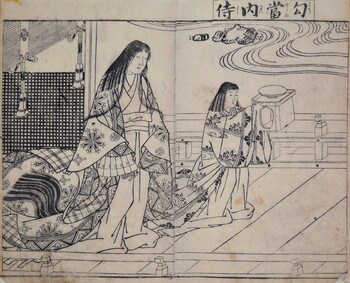
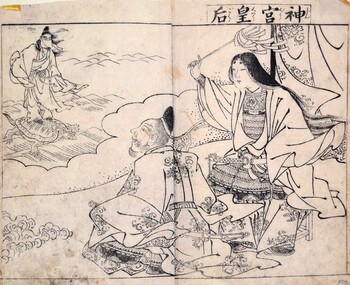
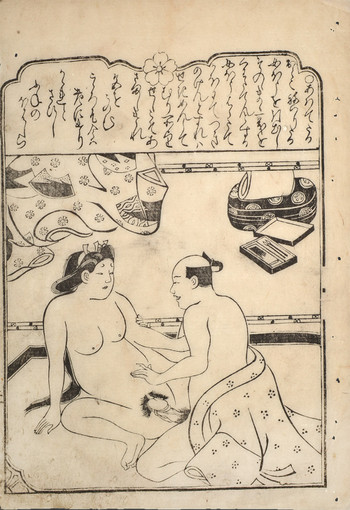
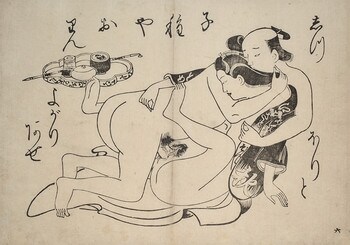
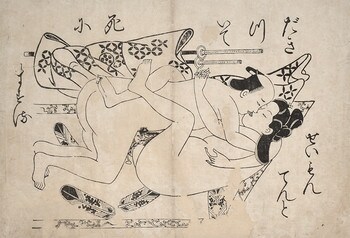
By the mid-17th century, this sacred medium evolved into ukiyo-e, or “pictures of the floating world.” Early masters such as Hishikawa Moronobu and Okumura Masanobu defined the genre through refined monochrome prints, celebrated for their fluid lines and elegant compositions.
The early 18th century brought experimentation with hand-applied color, though the process remained labor-intensive and costly. A major breakthrough came around 1765 with the development of nishiki-e—full-color prints produced through multiple carved blocks—ushering in the vibrant aesthetic most closely associated with ukiyo-e today.
Ronin Gallery is pleased to present an online exhibition of rare and significant early ukiyo-e prints, tracing the medium’s evolution from its sacred origins to its flourishing as a popular art form. Please note that some works in this exhibition are explicit, reflecting the prevalence of shunga in early ukiyo-e production.
37 Products
Kiyomasu II
Chapter 31: The Handsome Pillar (Makibashira)
JP-212392
Kiyohiro
Kabuki Actors Ichimura Kamezo I as Sengokuya Ihei and Sanogawa Ichimatsu I as his Wife Omatsu
JP-212374
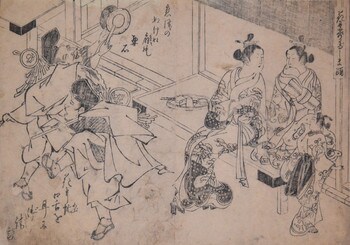
Masanobu
The Brocades of Ogura (Ehon Ogura no Nishiki), v. I, II, III, IV
JP-212297
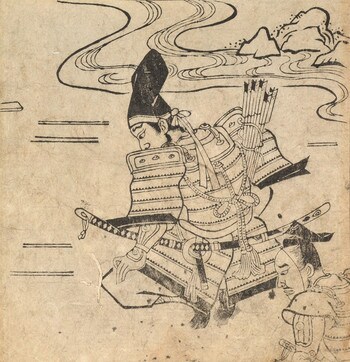
Unsigned / Unknown Artist
Seven Hardships Destroyed, Seven Blessings Bestowed
JPR1-63372